ZenCortex Reviews: What These Hearing Support Drops Contain and What the Evidence Supports
By the Nature Cove Editorial Team · Updated October 2026
Disclosure: this article contains affiliate links. If you buy through them, we may earn a commission at no extra cost to you. It does not change what we write.
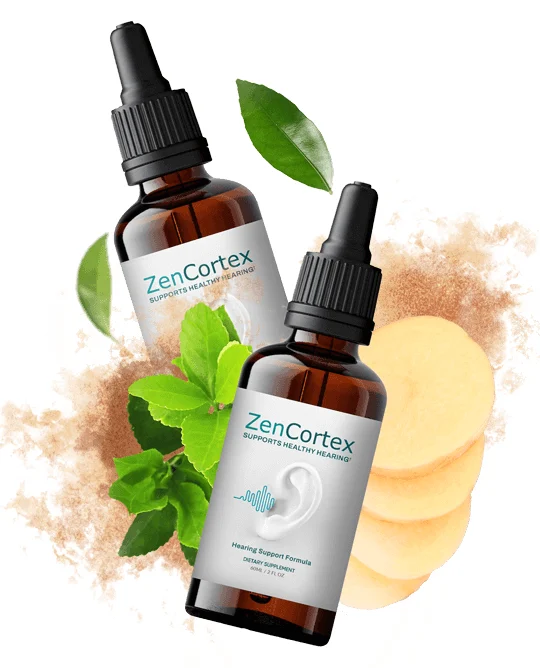
ZenCortex at a Glance
| Form | Liquid drops — 1 ml dropper twice a day; 60 ml bottle (about 30 days) |
| Core ingredients | 200 mg proprietary blend of 22 herbs and amino acids (maca, grape seed, green tea, guarana, ginseng and more) + chromium |
| Made in | USA, in an FDA-registered, GMP-certified facility (according to the official contact page) |
| Guarantee | 60 days from the date of purchase |
| Shipping (US) | Free on 3- and 6-bottle bundles; fee on 2 bottles not shown until checkout |
| Main caution | Contains guarana (caffeine) and blood-sugar herbs — check with a doctor if you take medication |
Ringing in the ears, struggling to follow conversations in a busy restaurant, or turning the TV up a little more every year: hearing changes are among the most common complaints after 50. The NIDCD estimates that about one in three Americans between 65 and 74 has hearing loss, and roughly 10% of adults have had tinnitus lasting at least five minutes in the past year. Many of them look for something simpler than a hearing test, which is the market ZenCortex was created for.
ZenCortex is a liquid supplement sold as a "Hearing Support Formula" that the brand says also supports memory and mental sharpness. In this review we go through the full Supplement Facts label published on the official site, look at what the research says about the main ingredients, point out a few things the marketing leaves out, and explain the price, shipping and refund terms so you know exactly what you are signing up for.
→ See the full ZenCortex label on the official website
What Is ZenCortex?
ZenCortex is a dietary supplement in liquid form. Each bottle holds 60 ml (2 fl oz) with a dropper; the label lists a serving size of 1 ml and 60 servings per container, and the directions say to take about one full dropper twice a day, so one bottle lasts about a month. The marketing attributes the formula to a creator named Jonathan Miller, but the site gives no professional background for him.
The official contact page says ZenCortex is made in the United States in an FDA-registered and GMP-certified facility, and the label lists a distributor address in Aurora, Colorado. The sales page describes it as plant-based, non-habit-forming and stimulant-free, with "over 20" ingredients. As with every supplement, the label carries the standard notice that these statements have not been evaluated by the FDA, and "FDA-registered facility" is not the same as an approved product.
How ZenCortex Is Said to Work: Claims vs. Evidence
The sales page says ZenCortex "shields" the ears using research-backed ingredients in precise ratios, and pairs each featured ingredient with a benefit: grape seed for antioxidant protection, green tea for blood flow to the ears, ginseng for nerve protection, astragalus for "clear sounds", and so on. The scientific references listed on the site are mostly general papers about tinnitus, brain mapping and B vitamins, rather than studies of ZenCortex or its exact formula.
The honest picture from mainstream medicine is less exciting. The most common type of hearing loss in older adults, age-related (sensorineural) hearing loss, comes from gradual damage to the hair cells of the inner ear and the hearing nerve. Those cells do not grow back in humans, and no supplement has been shown to restore them. For tinnitus, the American Academy of Otolaryngology–Head and Neck Surgery's clinical guideline recommends against using dietary supplements as a treatment, because trials have not shown a benefit. Cochrane reviews of the two most-studied options, ginkgo and zinc, also found no convincing effect on tinnitus.
That does not mean the ingredients do nothing in the body; some are antioxidants and some affect circulation. It means there is no good evidence that a blend like this improves hearing or quiets tinnitus, and you should treat the hearing claims as hopes rather than established facts.
The Full ZenCortex Label
Unlike many products in this category, ZenCortex does publish its Supplement Facts panel. Per 1 ml serving it lists 0.7 mcg of chromium (as chromium picolinate, 2% of the Daily Value) and a 200 mg proprietary herbal blend containing: maca root, grape seed, guarana seed, African mango, eleuthero root, astragalus root, green tea leaf, gymnema leaf, Coleus forskohlii root, bird pepper (capsicum), grapefruit seed, Asian ginseng root, raspberry ketones, L-glutamine, L-tyrosine, L-arginine, beta-alanine, monoammonium glycyrrhizinate, GABA, L-ornithine, L-tryptophan and L-carnitine. Other ingredients are deionized water, organic citrus extract, natural flavors, stevia and xylitol.
Two observations are worth making. First, 200 mg shared among 22 ingredients works out to an average of about 9 mg each, and the label does not show how the blend is split. Most of the studies mentioned below used hundreds of milligrams of a single ingredient. Second, several of the listed ingredients — African mango, forskolin, raspberry ketones, gymnema, capsicum and chromium — are usually sold for weight or blood sugar, not hearing, and guarana is a natural source of caffeine, which sits awkwardly with the "no stimulants" claim on the sales page.
ZenCortex Ingredients and What the Research Says
The sales page highlights eight ingredients. Here is what research says about each one, keeping in mind that the doses in ZenCortex are not disclosed.
1. Grape Seed Extract
Grape seed extract is rich in proanthocyanidins, a group of antioxidants. Animal studies have explored whether antioxidants can reduce noise- or drug-related damage to the inner ear, but there are no solid human trials showing that grape seed extract protects or improves hearing. NCCIH describes it as generally well tolerated, with a possible interaction with blood thinners.
2. Green Tea Leaf
Green tea provides catechins such as EGCG and a small amount of caffeine. Lab and animal research suggests catechins may protect inner-ear cells from some forms of stress, but human hearing data is lacking. The claim that it "improves blood flow to the ears" is not something human studies have shown.
3. Gymnema Sylvestre
Gymnema is an Ayurvedic herb studied mainly for blood sugar; it can reduce the taste of sweetness and may modestly lower glucose. We found no research linking it to hearing. Because it may lower blood sugar, people on diabetes medication should be careful.
4. Capsicum Annuum (Bird Pepper)
Capsicum contains capsaicin, the compound that makes peppers hot. It is studied for pain relief (as a cream) and for a small effect on metabolism. The sales page links it to "healthy inflammation"; there is no human evidence connecting oral capsicum to hearing.
5. Panax Ginseng (Asian Ginseng)
Asian ginseng is one of the most studied herbs for energy and mental performance, with mixed results in human trials. Some small studies, mostly from Asia, have looked at red ginseng in tinnitus or noise-related hearing changes, but they are too small and inconsistent to draw conclusions. NCCIH notes it may affect blood sugar and can cause sleep problems in some people.
6. Astragalus
Astragalus root is used in traditional Chinese medicine, often for the immune system. A few laboratory and animal studies have tested it in models of inner-ear damage, but human evidence for hearing is essentially absent. The sales page claim that it "supports clear sounds" is not backed by clinical research.
7. Chromium Picolinate
Chromium is a trace mineral involved in how the body uses insulin. The NIH Office of Dietary Supplements notes that studies of chromium supplements for blood sugar have produced mixed results. ZenCortex provides 0.7 mcg per serving, or 1.4 mcg a day at the label dose — a small amount compared with the 35 mcg Daily Value, and far below the 200 to 1,000 mcg used in most chromium studies. There is no evidence linking chromium to hearing.
8. Maca Root
Maca is a Peruvian root used for energy and libido, with a few small human trials on desire and mood. It is listed first in the proprietary blend, which on a standard label suggests it is the largest single ingredient. It has no established role in hearing health but is generally well tolerated.
The remaining ingredients include eleuthero (an adaptogen), amino acids such as L-tyrosine, L-arginine and L-tryptophan, and GABA. They are common in energy and mood formulas. In the very small amounts possible within a 200 mg blend, a meaningful effect on hearing or memory is unlikely.
Prefer drops over capsules? Check ZenCortex's current bundles on the official site.
Visit the Official ZenCortex Website →Pros and Cons of ZenCortex
Pros
- Full Supplement Facts panel published on the official site
- Liquid drops that can be taken under the tongue or mixed into water or juice
- Made in the USA in an FDA-registered, GMP-certified facility, according to the brand
- One-time purchase; the site states there are no recurring charges
- 60-day money-back guarantee
Cons
- Hearing and tinnitus claims are not supported by clinical evidence
- 22 ingredients share a 200 mg blend, so individual amounts are likely very small
- Contains guarana (caffeine) despite the "no stimulants" claim
- Several weight-loss and blood-sugar ingredients with no link to hearing
- Refunds require an RMA and returning bottles at your own shipping cost; shipping fees may be deducted
Who Might Consider ZenCortex (and Who Should Not)
ZenCortex may appeal to adults who:
- have already had a hearing evaluation and want to add a general antioxidant and herbal supplement to their routine
- prefer liquid drops to capsules
- are comfortable with a small amount of caffeine from guarana and green tea
- understand that it is a low-evidence product and want to try it under the 60-day guarantee
It is not a good fit, or should only be used after medical advice, if you:
- have sudden hearing loss in one or both ears — this is a medical emergency that needs prompt treatment, ideally within days
- have tinnitus in only one ear, pulsing tinnitus, dizziness or ear pain or discharge
- take diabetes medication (gymnema, chromium and ginseng can lower blood sugar)
- take antidepressants or other serotonergic drugs (the blend contains L-tryptophan), blood thinners, or stimulant-sensitive medication
- are pregnant, breastfeeding or under 18, as the label itself warns
If your hearing has changed, the most useful first step is an audiogram. Hearing aids have strong evidence: the ACHIEVE trial, published in The Lancet in 2023, found that a hearing intervention slowed cognitive decline in older adults at higher risk, which is a far stronger result than any hearing supplement has.
Safety and Side Effects
No serious side effects have been publicly reported for ZenCortex as a finished product, and most of its ingredients are common in supplements and foods. Based on the label, these are the points to watch:
- Caffeine: guarana and green tea both supply caffeine. The amount is not stated, but if you are sensitive to caffeine, have heart rhythm problems or take the second dose late in the day, you may notice jitters or poorer sleep. Caffeine itself can make tinnitus feel worse for some people.
- Blood sugar: gymnema, chromium, ginseng and African mango may lower glucose. People on insulin or other diabetes drugs should check with their doctor.
- Drug interactions: L-tryptophan can add to the effect of serotonergic drugs; grape seed and ginseng may interact with blood thinners; grapefruit-derived ingredients can affect how some medicines are processed, so ask a pharmacist if your medication carries a grapefruit warning.
- Xylitol: the sweetener is safe for people but highly toxic to dogs — store the bottle where pets cannot reach it.
The label also says not to exceed the recommended dose and to consult a physician before use if you take medication or have a medical condition, which is sensible advice for this formula.
How to Use ZenCortex
The label directions are about one full dropper (1 ml) twice a day. The official FAQ adds that the first dose should be taken before breakfast and the second before lunch, either under the tongue or mixed into water or juice, and that a full dropper is about 15 drops. Taking both doses before midday also makes sense given the caffeine content. Shake the bottle, keep it in a cool, dry place and do not use it if the safety seal is damaged.
The brand recommends at least three months of use. If you try it, keep a simple weekly note on how noticeable your tinnitus is or how easily you follow conversations, and compare against a hearing test where possible. That gives you an honest basis for deciding before the guarantee window closes.
ZenCortex Price, Shipping and Guarantee
The official order page offers three bundles, with the price per bottle falling as you buy more. A single bottle at $179 also appears on the brand's home page:
| Package | Price shown on the official site |
|---|---|
| 1 bottle (30-day supply) | $179, shown on the home page with free shipping |
| 2 bottles (60-day supply) | $79 per bottle — $158 total + shipping (fee shown at checkout); no bonuses |
| 3 bottles (90-day supply) | $69 per bottle — $207 total, free US shipping + 2 e-books |
| 6 bottles (180-day supply) | $49 per bottle — $294 total, free US shipping + 2 e-books |
| Bonuses | Two digital guides: "Hear Like A Pro" and "Powerful Ways To Sharpen Your Memory" |
| US delivery | 1 to 2 business days processing; about 5 to 10 days to arrive |
| Guarantee | 60 days from the date of purchase |
The site states that payment is a one-time charge with no future billing. International orders are possible, but the shipping policy warns that some countries can take several weeks and may carry extra fees. Because the 2-bottle shipping fee and the single-bottle offer are not shown on the same page, confirm the final total at checkout.
What the Refund Policy Actually Says
The sales page calls the guarantee "no questions asked", but the written return policy has several steps:
- The 60 days count from the date of purchase, not delivery.
- You must email support to request a return authorization number (RMA) within that window.
- You must ship the product back at your own cost within 14 days of receiving the RMA, with the RMA number included, to the return address in Aurora, Colorado.
- The FAQ says empty bottles can be returned, and that the refund is made minus shipping and handling fees.
- Orders can be cancelled within 24 hours of purchase, according to the shipping policy.
Keep your receipt, the RMA email and the return tracking number. Start the return well before day 60 so shipping delays do not push you past the deadline.
→ Check today's ZenCortex price and bundles on the official website
What We Saw on the Official ZenCortex Order Page (October 13, 2026)
On October 13, 2026 we opened the official order page ourselves and followed the checkout up to the payment step, without placing an order, to record exactly what a buyer sees. The screenshots below are unedited crops from that visit.


- At the secure checkout the bundles came to: $158.00 plus $9.95 shipping, $167.95 total; $207.00 with free shipping; $294.00 with free shipping. Tax showed as $0.00.
- Contact address listed on the official site: support@zencortexhq.com.
Where to Buy ZenCortex
ZenCortex is sold through its official website, and the brand says to buy only there to be sure of getting the original product. Copies on marketplaces or unfamiliar sites may be old stock, imitations or not covered by the 60-day guarantee. The official order page is the only place where the published refund terms clearly apply. Support is listed by email and by phone at +1 877 908 5398, seven days a week.
ZenCortex vs. Proven Hearing Care
It is worth putting ZenCortex next to the options that do have evidence. For age-related hearing loss, hearing aids — including the over-the-counter models the FDA allowed in 2022 for adults with mild to moderate loss — are the most effective tool, and they also help with tinnitus for many people. For bothersome tinnitus, the clinical guideline supports hearing evaluation, sound therapy and cognitive behavioral therapy. Protecting your ears from loud noise is the single best way to prevent further damage.
A supplement like ZenCortex can sit alongside those steps if you want to try it, but it should not replace a hearing test or delay treatment, especially for sudden changes.
Final Verdict
ZenCortex deserves credit for publishing its full label, which lets you see exactly what you are buying. That same label is also its weakest point: a 200 mg blend spread across 22 ingredients, many of them weight-loss and blood-sugar compounds with no link to hearing, plus caffeine from guarana despite a "no stimulants" claim. The hearing and tinnitus promises are not supported by clinical research, and the main hearing guidelines advise against supplements for tinnitus.
If you have already had your hearing checked, are not on interacting medications and want to try it, the 60-day guarantee lets you do so with limited risk, provided you follow the RMA steps. Set realistic expectations: at best it is a general wellness supplement, and real improvements in hearing come from proper diagnosis, noise protection and, where needed, hearing aids.
Frequently Asked Questions (FAQs)
Is ZenCortex FDA-approved?
No dietary supplement is FDA-approved. The brand says ZenCortex is made in an FDA-registered, GMP-certified facility, which concerns manufacturing standards, not proof that the product works.
What is in ZenCortex?
Per 1 ml: 0.7 mcg of chromium and a 200 mg proprietary blend of 22 ingredients, including maca, grape seed, guarana, African mango, green tea, gymnema, Asian ginseng, astragalus and several amino acids. The individual amounts are not disclosed.
Can ZenCortex cure tinnitus or reverse hearing loss?
No supplement has been shown to do either. Clinical guidelines advise against supplements as a tinnitus treatment, and the label itself says the product is not intended to treat any disease.
Does ZenCortex contain caffeine?
The label lists guarana seed and green tea leaf, both natural sources of caffeine. The amount is not stated, so take it in the morning if you are sensitive.
How do I take ZenCortex?
Take about one full dropper (1 ml) twice a day — the brand suggests before breakfast and before lunch — under the tongue or in water or juice. One 60 ml bottle lasts about 30 days.
Does ZenCortex have side effects?
No serious side effects have been publicly reported. Watch for caffeine effects, blood sugar changes if you take diabetes medication, and interactions with antidepressants or blood thinners.
How does the ZenCortex refund work?
Email support within 60 days of purchase to get an RMA, then return the bottles at your own cost within 14 days. The refund is issued minus shipping and handling fees.
Want to compare the current ZenCortex packages? The official site lists today's prices.
Visit the Official ZenCortex Website →References
- National Institute on Deafness and Other Communication Disorders (NIDCD). Tinnitus — health information.
- National Institute on Deafness and Other Communication Disorders (NIDCD). Age-Related Hearing Loss (Presbycusis).
- Tunkel DE, et al. Clinical practice guideline: tinnitus. Otolaryngol Head Neck Surg. 2014;151(2 Suppl):S1-S40.
- Hilton MP, Zimmermann EF, Hunt WT. Ginkgo biloba for tinnitus. Cochrane Database Syst Rev. 2013;(3):CD003852.
- Person OC, et al. Zinc supplementation for tinnitus. Cochrane Database Syst Rev. 2016;(11):CD009832.
- Lin FR, et al. Hearing intervention versus health education control to reduce cognitive decline in older adults with hearing loss in the USA (ACHIEVE). Lancet. 2023;402(10404):786-797.
- NIH Office of Dietary Supplements. Chromium — Fact Sheet for Health Professionals.
- NIH Office of Dietary Supplements. Dietary Supplements for Exercise and Athletic Performance — Fact Sheet for Health Professionals (caffeine section).
- National Center for Complementary and Integrative Health (NCCIH). Grape Seed Extract — fact sheet.
- National Center for Complementary and Integrative Health (NCCIH). Green Tea — fact sheet.
- National Center for Complementary and Integrative Health (NCCIH). Asian Ginseng — fact sheet.
- U.S. Food and Drug Administration. FDA finalizes historic rule enabling access to over-the-counter hearing aids (August 2022).
This review is for general information only and is not medical advice. Product details (ingredients, prices, guarantee) come from the official ZenCortex pages as checked in October 2026; they can change, so confirm them at checkout. Talk to your doctor before starting any supplement, especially if you take prescription medication or have a health condition.